Community
How Web3 Communities Co-Develop the Games They Play
October 21, 2025 / Orion's Gate Team
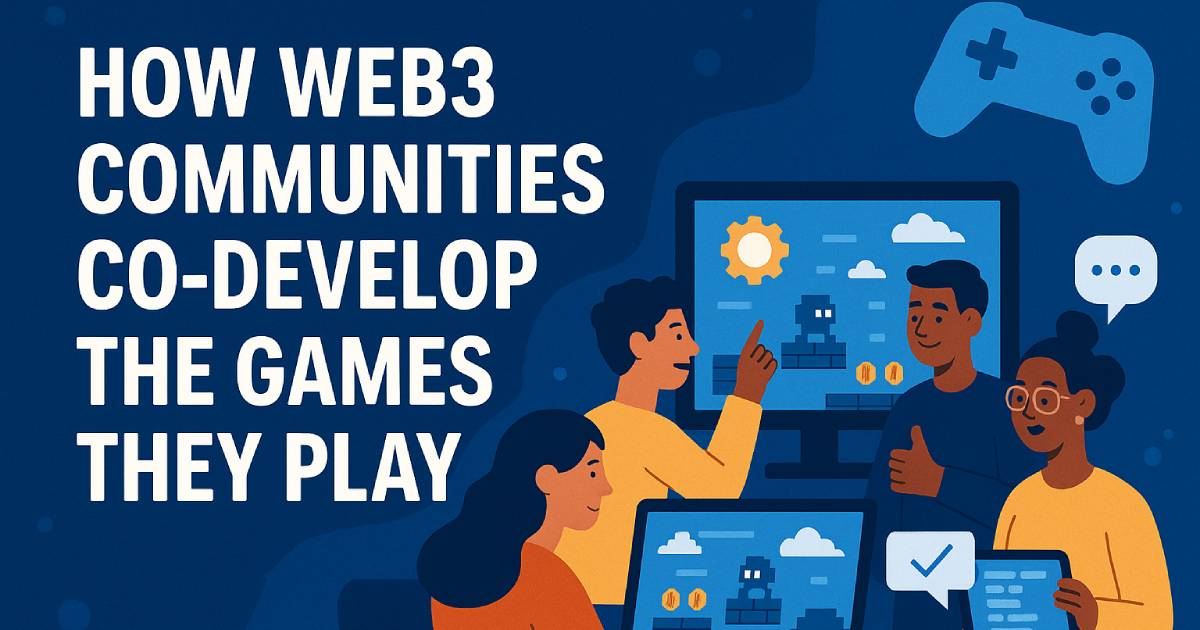
Web3 gaming communities aren't just fandoms on Discord-they're production partners. From token-gated playtests to on-chain votes and player-run guilds, communities now shape mechanics, economies, and even platform strategy. Below is a practical look at how those interactions work and the concrete impact they're having on development in 2024-2025.
The new interaction stack
1) Token-gated social hubs → faster iteration
Most top web3 titles run token-gated Discords and contributor programs that funnel structured feedback into design changes. When Pixels migrated to Ronin (late 2023), its social-game loop plus Ronin's community distribution helped it scale to seven-figure DAU and become a flagship of 2024-2025-proof that chain-level communities can become part of your UA engine and feature backlog [1][2][3].
2) DAOs & councils → roadmap and economy control
Projects like Illuvium formalized community power with an elected council and execution DAO. Proposals (economy tweaks, emissions, budget) move from forum to on-chain execution, turning governance into a repeatable dev ritual rather than a one-off marketing beat [4].
3) Ecosystem DAOs → cross-game compounding
Ecosystems such as Treasure connect multiple games with shared tokens, community funding, and transparency reports that invite builders to co-plan incentives and content beats. Even through 2025's turbulence (treasury pressure, product resets), the community continues to steer allocation and focus, illustrating both the leverage and responsibility of community-run ecosystems [5].
4) Guilds → distribution, retention, and culture
Guilds like Yield Guild Games (YGG) onboard players at scale, coordinate events, and provide feedback loops back to devs. Recent partnerships show guilds are still critical distribution rails and can be activated around specific launches or regions [7].
5) UGC & “modding on steroids” → creator-led roadmaps
Games like Shrapnel are baking creator marketplaces and revenue share into the core loop, treating the community as a live content studio. This shifts content cadence from studio-only to community-accelerated, with governance and payouts encoded [8].
How these interactions change development (with examples)
A. Roadmaps shift with community signal
Pixels x Ronin: Community momentum on Ronin (wallet growth, DAAs, and Pixels DAU) validated network-native social distribution. The team's 2025 plans explicitly build on that feedback loop and player behavior, not just top-down design. Result: more farming-social features and live-ops tied to player-led events [1][2][3].
Illuvium's councils: Monthly governance newsletters record proposal velocity, giving dev teams a predictable cadence to surface changes (balance, rewards, spend) and to ship with real mandate [4].
Key takeaway for devs: publish a predictable governance calendar (proposal windows, snapshot dates) and tie each sprint to a community-reviewed decision, even if advisory. It reduces back-and-forth and turns feedback into shippable scope.
B. Economic tuning becomes community science
Ecosystems like Treasure moved incentive design into public view (financial transparency threads; re-prioritization when treasury pressure mounted). Even painful pivots can preserve trust if the why and how are community-coauthored [5].
Axie continues rolling out governance portals (Axie Score, quadratic voting experimentation) that let players weigh in on treasury usage and system changes-useful when balancing sinks/sources under real market conditions [10].
Key takeaway for devs: treat tokenomics like live telemetry. Expose dashboards and hypotheses to the community; use test ballots (non-binding) before on-chain commits to de-risk.
C. UGC shortens your content treadmill
Shrapnel positions creators as a parallel content team with monetization built in; more creator output = more testable content and data to guide studio updates [8].
TCGs like Parallel publicly update roadmaps, production pipelines, and client refactors-inviting players to test, co-design UI, and pressure-test mobile/Steam plans ahead of release windows. That openness tightens the design loop [9].
Key takeaway for devs: ship a Creator SDK (even lightweight) and a revenue switch before full launch. Reward iteration, not only perfection.
D. Distribution now lives at the ecosystem and guild layer
Ronin's permissionless shift and public growth stats show how a chain's native audience can be an activation channel, not just infrastructure. Building “with the chain's community” impacts your tutorial design, event cadence, and collab roadmap [1][2].
YGG partnerships around 2025 launches show guilds still drive first-session conversions and regional momentum-especially when paired with creator programs and tournaments [7].
Key takeaway for devs: budget for ecosystem and guild integrations like you would for UA-co-branded quests, allowlists, and content contests belong on your Gantt, not in “community later.”
What's changing in 2025 (macro context)
Reports from DappRadar/industry trackers show fluctuating on-chain usage this year; yet web3 gaming remains the most resilient dapp category by engagement. That turbulence makes community-led retention and evergreen creator loops more valuable than speculative spikes [6].
Conclusion
In web3, community is not a channel-it's a co-developer. Teams that ship the instruments (votes, creator rails, transparent dashboards) win compounding advantages: faster iteration, cheaper distribution, and deeper retention. Build your next sprint around one community instrument, publish the decision log, and measure the lift. The best patch notes in web3 read like a community changelog.
References
BitPinas — “Ronin Goes Permissionless, Opens to All Developers” (Dec 2024).
GAM3S.GG — “Ronin Network Continues to Dominate Web3 Gaming” (June 2025).
Outposts — “Pixels Hits 1M Daily Users After Ronin Migration” (Oct 2024).
Illuvium — “DAO Governance Newsletter” (July 2024) and Messari governance overview.
Treasure — Community financial transparency threads and 2025 pivot coverage (incl. DappRadar).
DappRadar — “State of Blockchain Gaming Q1 2025” and “Games Report May 2025.”
Yield Guild Games (YGG) — 2025 partnership announcements and coverage (incl. GAM3S.GG/market roundups).
CoinDesk — “It’s Modding, But on Steroids: Mark Long on the Future of Web3 Gaming” (Apr 2024) — Shrapnel’s creator-first model.
Parallel — Public roadmap and production updates (2024–2025), including client refactors and launch plans.
NFTPlazas / eGamers / Sky Mavis — Axie governance portal & score system coverage (2024–2025).