Blog & Devlogs
Insights, updates, and behind-the-scenes from the Orion's Gate team.

SEA, LATAM, MENA: Regional Go-To-Market Patterns for Web3 Games That Actually Stick (2025)
In 2025, the fastest, cheapest paths to scale for web3 games aren't global-they're regional. If you tailor funnel, payments, and community ops to the realities of Southeast Asia (SEA), Latin America (LATAM), and Middle East & North Africa (MENA), you can turn volatile hype into durable DAU and net on-chain revenue. Think: Android-first installs in SEA, PIX and cash-to-digital bridges in LATAM, and wallet-led funnels with telco and esports tailwinds in MENA. [1][2][3][4][5][6]

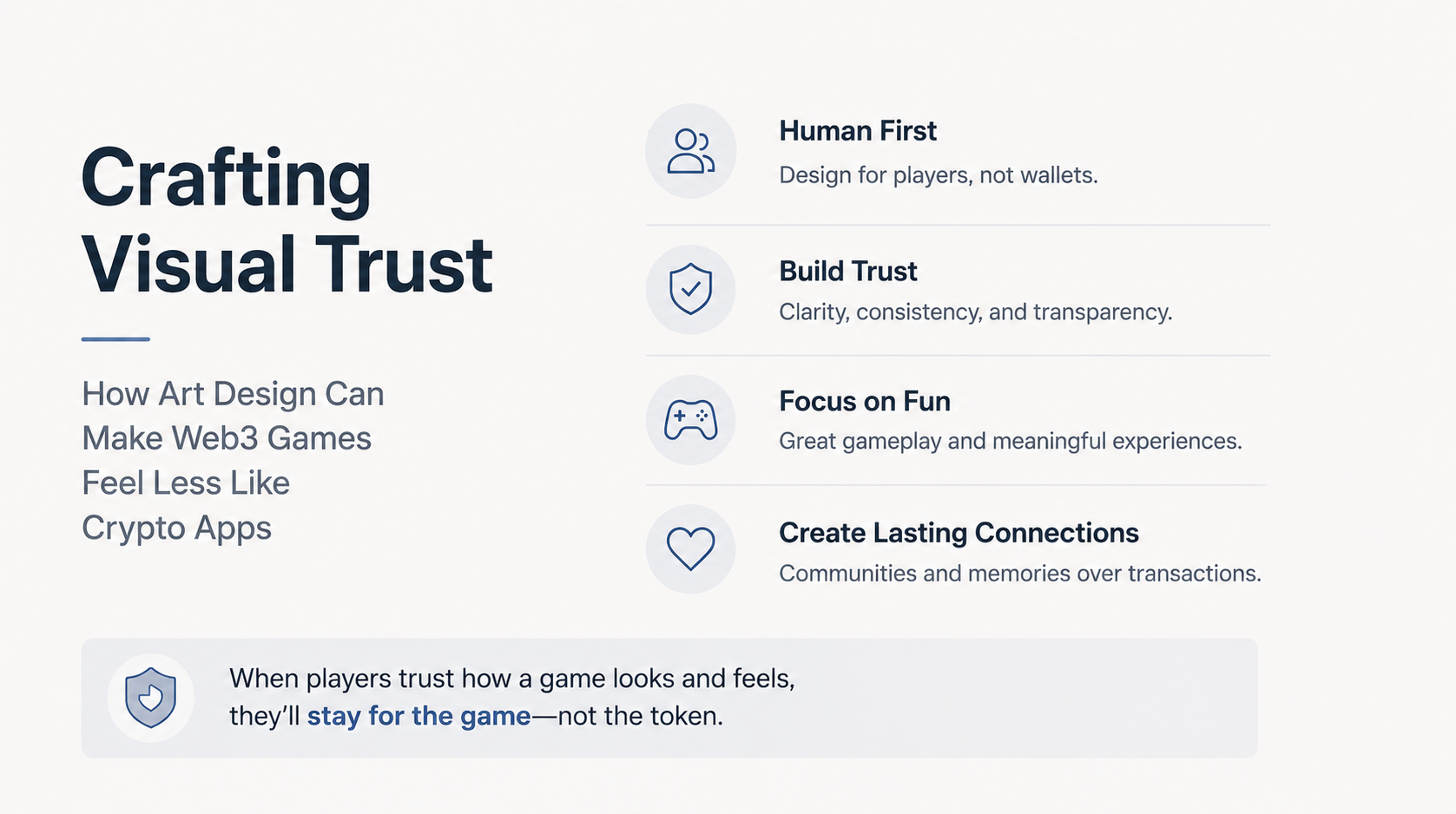
Materiality Matters: Clay, Ink, Plastic & Pixel as Visual Identities
In 2025, the strongest Web3 game aesthetics aren't about higher fidelity-they're about material choices. See how clay, ink, plastic, and pixel become brand-defining identities across Clay Nation . The Sandbox, Pudgy World, Serum City, and Pixels-with concrete art-direction takeaways and references.

From Protocols to Play: The Invisible Infrastructure Powering Web3 Gaming
Most players experience Web3 games through gorgeous art, fast combat loops, and immersive worlds-but behind every on-chain transaction, every evolving NFT, and every trustless marketplace is an invisible technological stack that makes it all possible. Today's Web3 games do not succeed because they use blockchain. They succeed because they are built on infrastructure that makes decentralization feel seamless: fast, secure, and scalable. This article reveals the hidden layer-the protocols, networks, and tools-powering the next generation of decentralized games.

DEVLOG-5: "Docs as a Feature": How We’re Scaling Documentation
We've wrapped our backend development and moved into feature-based work-notably gamer/user interactions with interactive NPCs. Alongside shipping features, we're investing heavily in documentation. It's not glamorous, but it's the difference between momentum and maintenance debt. And because we're building in public, we want our approach to feel professional, consistent, and secure.

Community Telemetry: Dashboards that Turn Feedback into Roadmaps
If your community is your growth engine, telemetry is the dashboard. In 2025, the best-run web3 games treat community signals-on-chain activity, Discord behavior, quest completions, governance votes, and social reach-as inputs to product. This playbook shows which metrics to track, how to wire them up, and how to convert raw sentiment into shippable roadmap items. Unify data from chain analytics (Dune), Discord, quest platforms, and governance into a single command center [1][6][9][15]. Track four flywheels: Discovery → Activation → Contribution → Governance, each with clear KPIs and action recipes [3][6][10][12]. Publish a decision log that maps metrics → proposals → shipped changes to compound trust and iteration speed [4][5].

Ad Tech Meets On-Chain: Performance Marketing, Attribution, and Fraud in Web3 Gaming (2025)
With Chrome keeping third-party cookies (for now), Apple shifting to AdAttributionKit, and wallet-native analytics maturing, Web3 UA finally has a measurable funnel-from click → install → on-chain event. The opportunity is real, but so are the risks: AI bot traffic, spoofed ads, and sybil farms can torch budgets unless you harden attribution and fraud defenses end-to-end. [1][2][3][4][5]

Diegetic UI: When the World Is the HUD (Web3 Art & Design Edition)
Learn how diegetic UI-interfaces embedded inside the game world-can elevate the art direction of Web3 games. See patterns, visual examples, and a practical checklist for turning on-chain identity and object-owned inventories into beautiful, in-world graphics.

Technical Review: Lumiterra - A Web3 Game Poised for Spotlight
The world of Web3 gaming is heating up - and while many titles come and go, Lumiterra stands out as a strong contender. Below is a focused technical review of how Lumiterra is built, what technologies underpin it, why it has potential, and what remains to be solved.

DEVLOG-4: Building the Backbone, Forging the Fun, and Hardening the Pipeline
Building the Backbone, Forging the Fun, and Hardening the Pipeline (October 2025)We've finished the main map, stitched in helper scenes and core helper mechanics (the game's backbone), and we're deep in production on signature game mechanics-the “one more run” loop that'll make our Web3 title sing. In parallel, the design team is sculpting one of the main characters. We also navigated two security incidents-Microsoft's CVE-2025-55315 and a recent npm supply-chain attack-and shipped mitigations within hours, costing us 1-3 days but keeping us on track. [1]

How Web3 Communities Co-Develop the Games They Play
Web3 gaming communities aren't just fandoms on Discord-they're production partners. From token-gated playtests to on-chain votes and player-run guilds, communities now shape mechanics, economies, and even platform strategy. Below is a practical look at how those interactions work and the concrete impact they're having on development in 2024-2025.

Storefront Shockwave: How the EU's DMA + Epic's Mobile Store Are Rewriting Web3 Game Distribution (2025)
The biggest unlock for web3 games in 2025 isn't a new chain-it's distribution. The EU's Digital Markets Act (DMA) has forced iOS to open to third-party stores, and Epic has seized the moment with a cross-platform storefront (PC + Android worldwide, iOS in the EU) and even fee relief. Combined with faster L2 infra and better live-ops design, this is reshaping go-to-market, retention, and monetization for web3 studios. [1][2][3][4][5]