
Technology
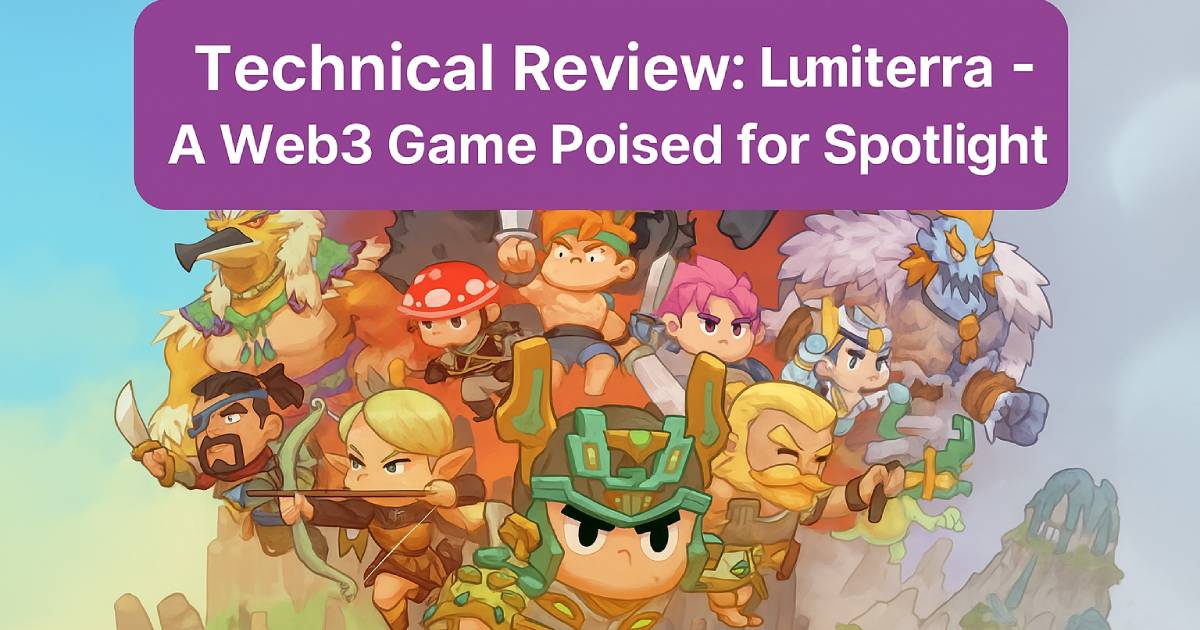
Technical Review: Lumiterra - A Web3 Game Poised for Spotlight
November 4, 2025 / Orion's Gate Team
The world of Web3 gaming is heating up - and while many titles come and go, Lumiterra stands out as a strong contender. Below is a focused technical review of how Lumiterra is built, what technologies underpin it, why it has potential, and what remains to be solved.

Game Overview & Why It Matters
Lumiterra is a free-to-play, cross-platform MMORPG (Windows, macOS, Android) combining survival, crafting, real-time combat, farming, and alliance mechanics [1][3].
What makes it interesting:
Fully open world, not just a mini Web3 game.
Player-owned economy: assets, crafting, and farming all tied to on-chain ownership [3].
Built on a gaming-friendly blockchain ecosystem: namely the Ronin Network [1].
Because of these factors, Lumiterra is more than a “Web3 experiment” - it's aiming to blend high-quality gameplay with blockchain economics.
Infrastructure & Blockchain Architecture
Chain Migration & Choice
Originally launched on another chain, Lumiterra migrated its ecosystem to Ronin Network to leverage lower fees and higher scalability for gaming-centric use cases [2].
Using Ronin means:
Lower transaction cost for in-game asset transfers and trades [2].
A blockchain environment designed for many micro-transactions - typical in gaming [5].
A trade-off: relying on side-chain and layer-2 assumptions (trust, bridging, validator security) rather than full main-net decentralisation.
Hybrid Game Architecture
Lumiterra separates game logic into two layers [3]:
Off-chain: Real-time gameplay - survival mechanics, physics, rendering, multiplayer servers.
On-chain: Asset ownership, marketplace transactions, token economy, and tradeable NFTs. For example, in-game items, farming rewards, and token rewards are recorded on-chain [3].
This hybrid approach is essential - pure on-chain everything (game logic + rendering) is not yet viable for high-performance gaming.
Economy, Assets & Token Mechanics
NFTs & Tradable Assets
Players in Lumiterra can collect resources, craft items, tame creatures, farm, and engage in PvP or alliances - many of these yield digital assets that are owned, tradeable, and designed to have value [3].
For example, farming tools, materials, and creatures may all be represented as NFTs or tokenised assets.
Tokenomics & In-Game Economy
The game's economy is multi-layered [1][3]:
Players may specialise (Combat, Farming, Gathering), creating economic interdependence [1].
Asset trading: Crafting produces items that can be traded or used. Ownership is on-chain and transparent [3].
Closed Beta launched with ≈ US$1 million in rewards, including on-chain assets and token drops [4].
Liquidity and stable pricing mechanisms (e.g., LUA + LUAUSD tokens) are intended to prevent rampant inflation [1].
Technical Considerations
On-chain metadata: crafting history, ownership, and upgrades must be efficient and low-latency.
Marketplace integration: must handle micro-transactions; side-chain usage helps.
Economy monitoring: tools are needed to track inflation, asset values, and player behaviour for sustainability.
Gameplay Tech Stack & Systems
Open-World Survival Crafting + Social Mechanics
Lumiterra supports exploration, cross-platform multiplayer, farming, creature taming, and alliance warfare [4].
The technical demands: persistent world servers, social/alliances, PvP zones, and real-time events.
AI Agents & Creature Systems
The game introduces AI-powered companions or agents (monsters you tame) that evolve and assist in farming or battles [3].
This adds backend complexity: agent logic, state tracking, and on-chain reward mechanisms.
Cross-Platform Integration
Lumiterra is designed for PC, Mac, and mobile (Android/iOS) and supports cross-platform play [4].
From a technical perspective, this means:
Unified engine or modular builds.
Data synchronisation across devices.
Wallet integration for ownership - with UX streamlined for mainstream players (non-crypto natives).
Security, Scalability & UX Challenges
Security & Trust
Using side-chains and bridges introduces risk: validator compromise, custodial issues, and asset loss [5].
Game economies with real-value assets are prime targets for exploits - rigorous smart-contract audits are required.
Scalability & Performance
Ronin handles high transaction volumes, but scaling to millions of players still requires optimisation [5].
Game logic (graphics, physics) must remain performant without blockchain bottlenecks.
Hybrid architecture must balance decentralisation, speed, and cost.
User Experience (UX)
On-boarding non-crypto players remains challenging (wallet setup, gas fees, chain complexity).
Players should feel like they're playing a game - not managing crypto wallets.
Seamless cross-platform sync and simple wallet integration are essential.
Why Lumiterra Could Take the Spotlight
Strong infrastructure choice: Migration to Ronin provides a scalable, low-fee network for gaming [2].
Rich genre depth: Not a casual Web3 game but a full MMORPG with crafting, farming, and alliance systems [3][4].
Player-owned economy: Encourages ownership, trade, and interdependence [3].
Ecosystem maturity: Closed Beta, reward pools, and community campaigns demonstrate strong backing [4].
Hybrid tech stack: Combines real-time gameplay, on-chain ownership, and cross-platform support [1][5].
If Lumiterra executes well, it could move beyond niche Web3 titles to reach a broader audience.
Key Risks & What to Watch
Economic balance: Crafting/trading loops must be rewarding but sustainable.
Gameplay quality: Blockchain layers should enhance fun, not overshadow it.
On-boarding friction: Wallets, fees, and chain setup still limit adoption.
Security risk: Bridges and validators remain vulnerable [5].
Retention challenge: Maintaining long-term engagement beyond early hype.
Conclusion
Lumiterra represents a technically ambitious Web3 title - combining the appeal of large-scale MMORPGs with blockchain-based asset ownership and economies.
For developers, it demonstrates a blueprint: hybrid architecture, scalable infrastructure, rich economy design, and multi-platform integration.
For players, it promises ownership, tradeability, and deeper community engagement.
If the developers deliver strong gameplay and maintain economic stability, Lumiterra could very well become a flagship Web3 game in the next generation of decentralised gaming [1][2][3][4][5].
References
Ronin Blog – “Welcome to Ronin, Lumiterra!”
PlayToEarn – “Lumiterra Migrates to Ronin, Enhancing Web3 Gameplay”
Crypto-Ambassador – “Lumiterra — Ronin’s First MMORPG”
NFTPlazas – “Web3 MMORPG Lumiterra Launches Closed Beta Test, Now Live”
CastleCrypto – “MMORPG Lumiterra from Sky Mavis to Launch on Ronin Blockchain”
