Blog & Devlogs
Insights, updates, and behind-the-scenes from the Orion's Gate team.

From Chains to Clouds: Hybrid Architecture Patterns That Keep Gameplay Fast and Ownership Real
Web2/Web3 hybrid games are becoming the “default serious” approach in 2025-2026: keep the moment-to-moment experience as smooth as a traditional live-service title, while still giving players real ownership, trading, and portability where it matters. The reason is simple: blockchains are great at settlement and proof of ownership, but real-time gameplay needs low latency, high throughput, and anti-cheat controls that are still best delivered with web2-style infrastructure. This article breaks down practical hybrid architecture patterns you can adopt today-without turning your game into a laggy on-chain experiment.

Color Systems for Live Games: Palettes That Scale Across Seasons Without Rebranding Every Patch
A live game needs color that can evolve-without breaking recognition. Learn a practical color system for live-service games: base palette, seasonal accents, event overlays, rarity ramps, UI contrast rules, and accessibility tooling. Includes a sprint-ready checklist and numbered references.

What Web3 Game Tech Will Look Like in 3 Years (Based on Current Constraints)
The Web3 gaming industry has moved rapidly from experimental prototypes to fully playable ecosystems. Yet, despite the hype around decentralized ownership, NFTs, and play-to-earn models, the technology behind Web3 games still faces significant limitations. So what happens next? Looking ahead, the future of Web3 gaming won't be defined by speculation-but by technical evolution. By analyzing today's constraints in scalability, UX, infrastructure, and game design, we can project what Web3 game technology will realistically look like in the next three years.

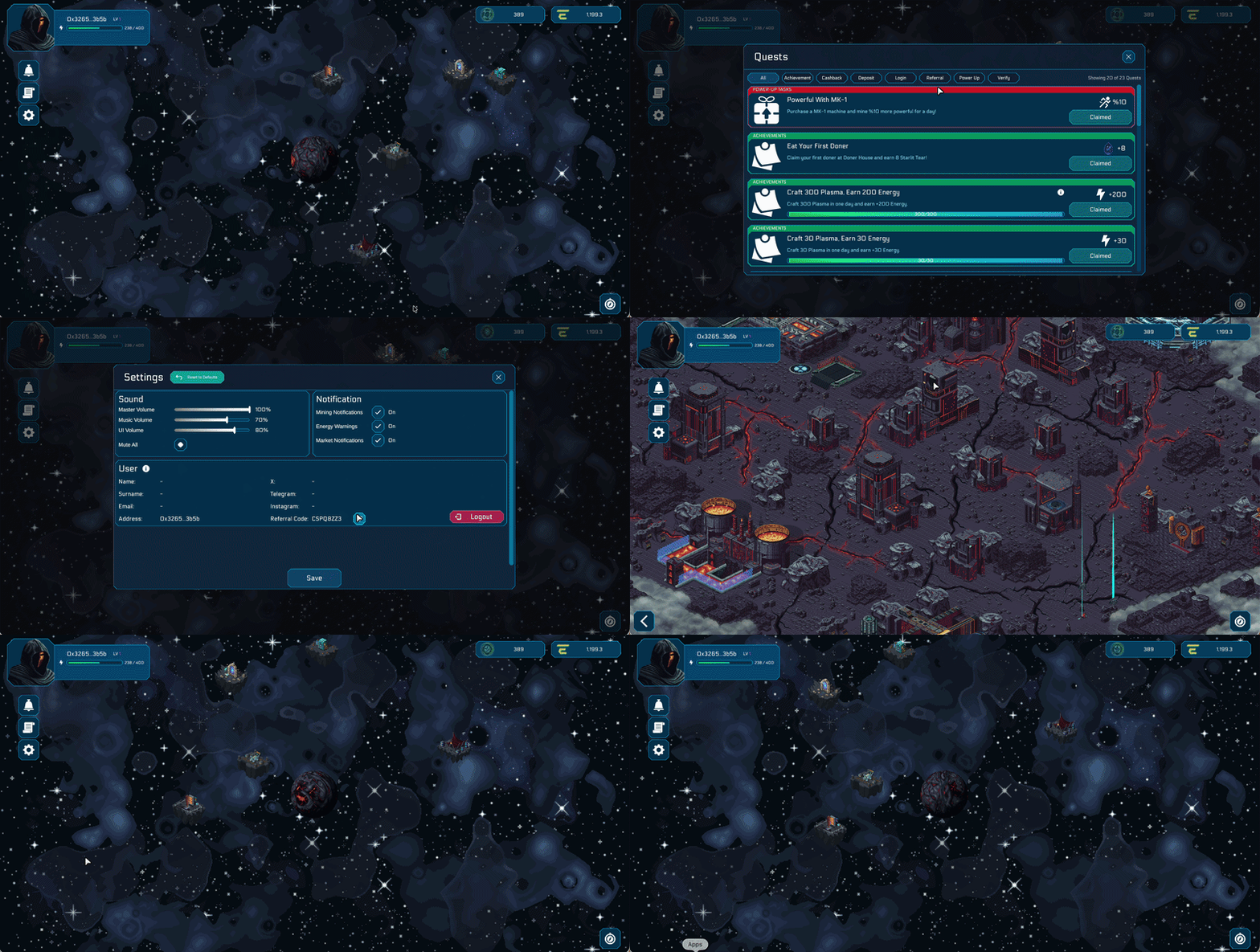
Devlog-8: Quests, Live Notifications, and Smarter AI NPCs
This week's progress pushed the game forward in three important directions: player progression, real-time feedback, and AI-driven interaction. In short, we introduced a quest system, implemented a live notification system for crafting and collecting flows, and completed the RAG configuration plus backend endpoint development for our AI NPC. At the same time, we're already laying the groundwork for the next phase: bringing this AI experience into the Unity UI and improving the planet surface map with a fresh asset approach.

The Lore Workshop: Co-Writing Worlds with Your Community (Without Losing Canon)
In web3 gaming, community is no longer limited to feedback, memes, and governance. It is increasingly becoming a creative layer of the product itself. Players want to help shape factions, write side stories, invent artifacts, and deepen the world around the game. That creates a huge opportunity for studios: community-made lore can increase emotional investment, extend content velocity, and make a world feel alive. But it also creates a real risk-if everyone writes, the canon can collapse. The solution is not to shut the community out. It is to build a lore workshop: a structured system where players can contribute to worldbuilding without breaking the rules of the universe. Done well, this turns community creativity into a long-term retention engine and a powerful brand asset [1][2][3].

Telegram-to-Token: How Mini Apps on TON Became Web3 Gaming's Fastest Distribution Loop
In 2025 and 2026, the most efficient growth engine in Web3 gaming doesn't look like a launcher, a marketplace, or a chain war. It looks like a messenger. Telegram Mini Apps (web apps that run inside Telegram) let games ship into a social graph where users already spend time, already share links, and already join communities. That “distribution-native” environment-plus TON as Telegram's preferred on-chain rail-created a new playbook: chat → tap-to-play → referral loops → token moment → retention. [1][2][3][4][5] This article breaks down what actually made the Telegram-to-token loop work, what broke when hype cooled, and how studios can build a version that lasts beyond airdrops.

The Social Screenshot Economy: Designing Worlds That Sell Themselves in a Single Frame
In 2026, discoverability is visual. Learn how to design screenshot-ready game worlds-from composition-first level art and “readable” color scripts to photo-mode tooling, emote staging, and social hubs that generate shareable moments. Includes Web3 examples and numbered references.

MMORPGs on the Blockchain: Technical Barriers and Emerging Solutions
Massively Multiplayer Online Role-Playing Games (MMORPGs) are among the most technically demanding genres in gaming. Persistent worlds, thousands of concurrent players, real-time combat, dynamic economies, and large-scale social coordination already push traditional infrastructure to its limits. Now add blockchain. Building MMORPGs on the blockchain introduces a new layer of complexity: decentralization, on-chain ownership, tokenized economies, smart contracts, and cross-chain interoperability. While Web3 promises player ownership and transparent economies, it also creates significant technical barriers. This article explores the core technical challenges of blockchain MMORPG development and the emerging solutions shaping the next generation of Web3 MMO infrastructure.

Devlog-7: Visual Polish, Crafting Fixes, and a Tastier Community Hub
Better composition, smoother crafting, livelier social space, and relentless bug-hunting.

Social-to-Session: Converting Posts, Frames, and Reels into First-Hour Engagement
f discovery doesn't become a session, it's just vanity. In 2025, the best-performing web3 games wire social surfaces-posts, Farcaster Frames, and short video reels-directly into the first hour: wallet connect, tutorial beat, and a “first win.” This article lays out a practical, KPI-driven plan to turn social reach into sessions, with tools and benchmarks you can cite. Aim for “session, not like.” Treat Reels, posts, and Frames as front doors to a 3-step first-hour flow: join → act → reward. Use the right pipes. Frames (Farcaster) can call actions and track them; deep links route users from social to in-app screens; Discord Server Insights shows where newcomers stall [9][10][11][7][3]. Benchmark ruthlessly. Reels remain a high-impression format for smaller accounts; track D1 quest completion and week-one retention to validate your funnel [1][5].

From Walletless to Web-Native: Passkeys, MPC, and the Next-Gen Onboarding Funnel (2025→2026)
The fastest-growing funnel in web3 ditches seed phrases and browser extensions. Passkeys (WebAuthn/FIDO2) remove password friction, MPC eliminates single-key risk, and account abstraction (ERC-4337) turns sign-ups into sessions that feel web2-fast—complete with gasless actions and session keys for uninterrupted play. Put together, this “web-native” stack lifts conversions from click → install → first on-chain action. [1][2][3][4][5][6][7][8][9]