

Blog & Devlogs
Insights, updates, and behind-the-scenes from the Orion's Gate team.
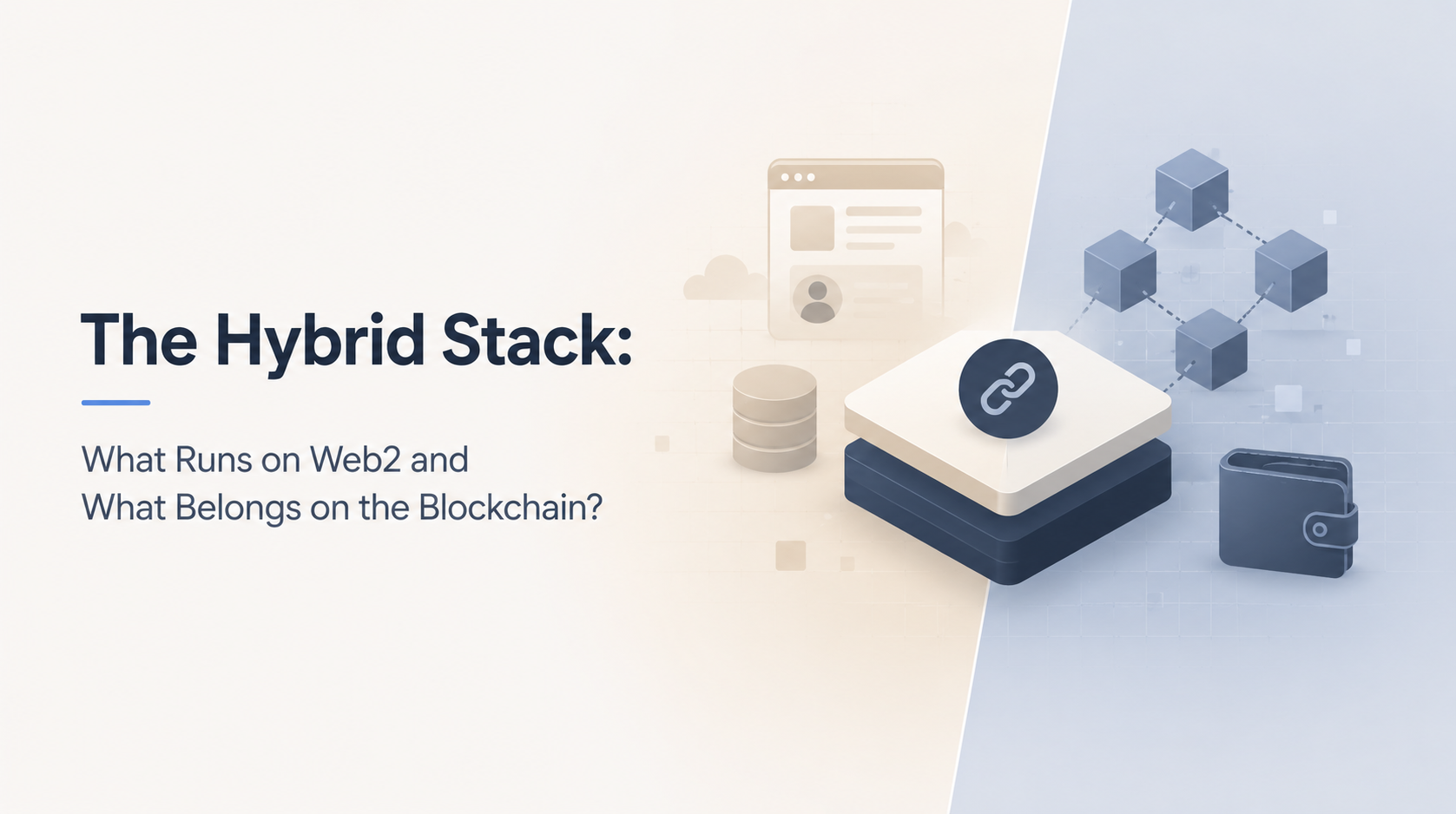
The Hybrid Stack: What Runs on Web2 and What Belongs on the Blockchain?
When blockchain gaming first emerged, many enthusiasts imagined a future where every aspect of a game-from player movement to combat and item ownership-would live entirely on the blockchain. It was an exciting vision that promised transparency, decentralization, and true digital ownership. Reality, however, has proven more nuanced.
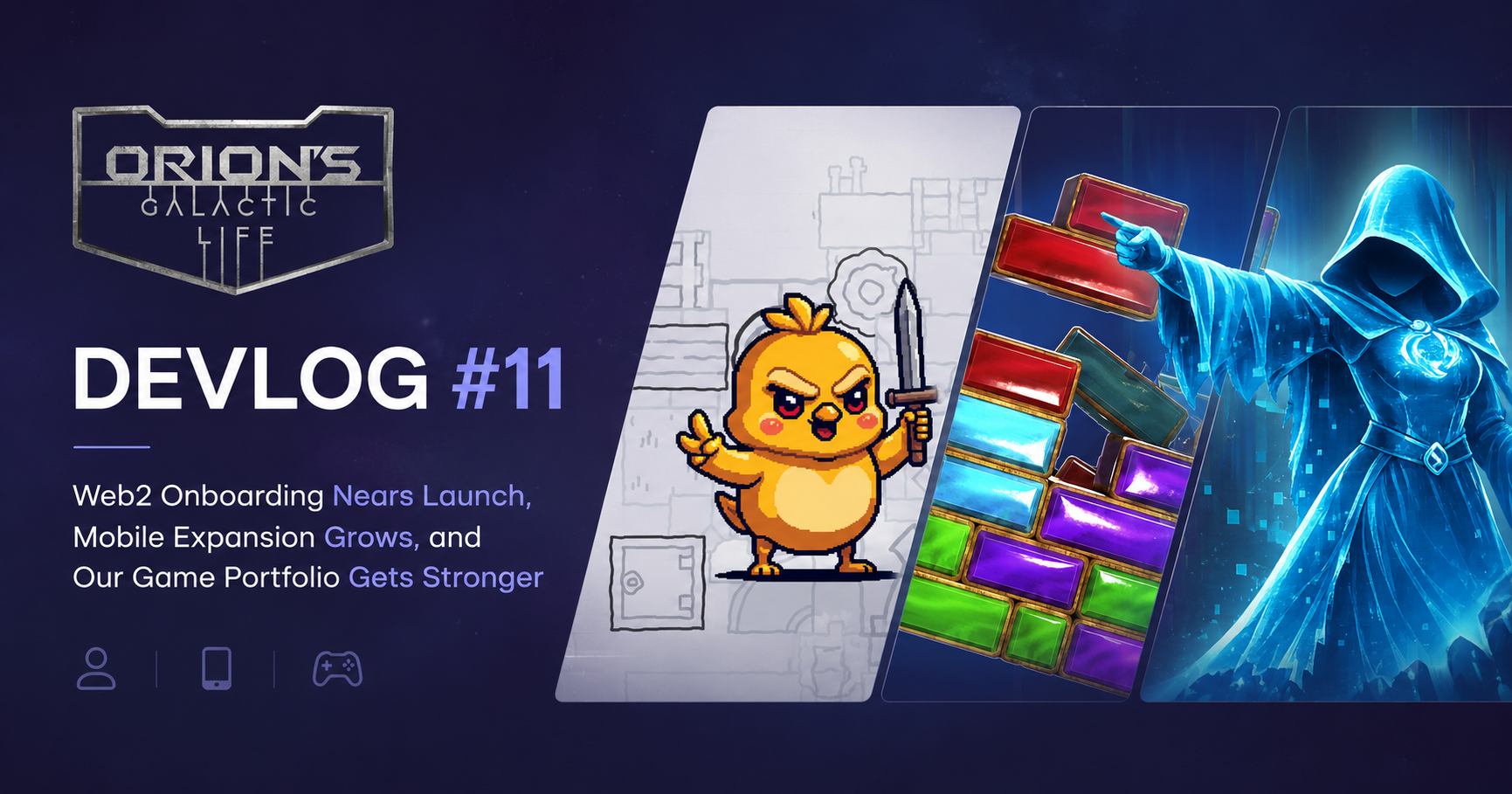
Devlog #11: Web2 Onboarding Nears Launch, Mobile Expansion Grows, and Our Game Portfolio Gets Stronger
Orion's Galactic Life is getting closer to launch-ready accessibility with near-complete Web2 onboarding, a lite mobile app in progress, and new Web3 payment solutions. We're also spotlighting Cascade Crush and Animal Survivor as our mobile portfolio continues to grow.
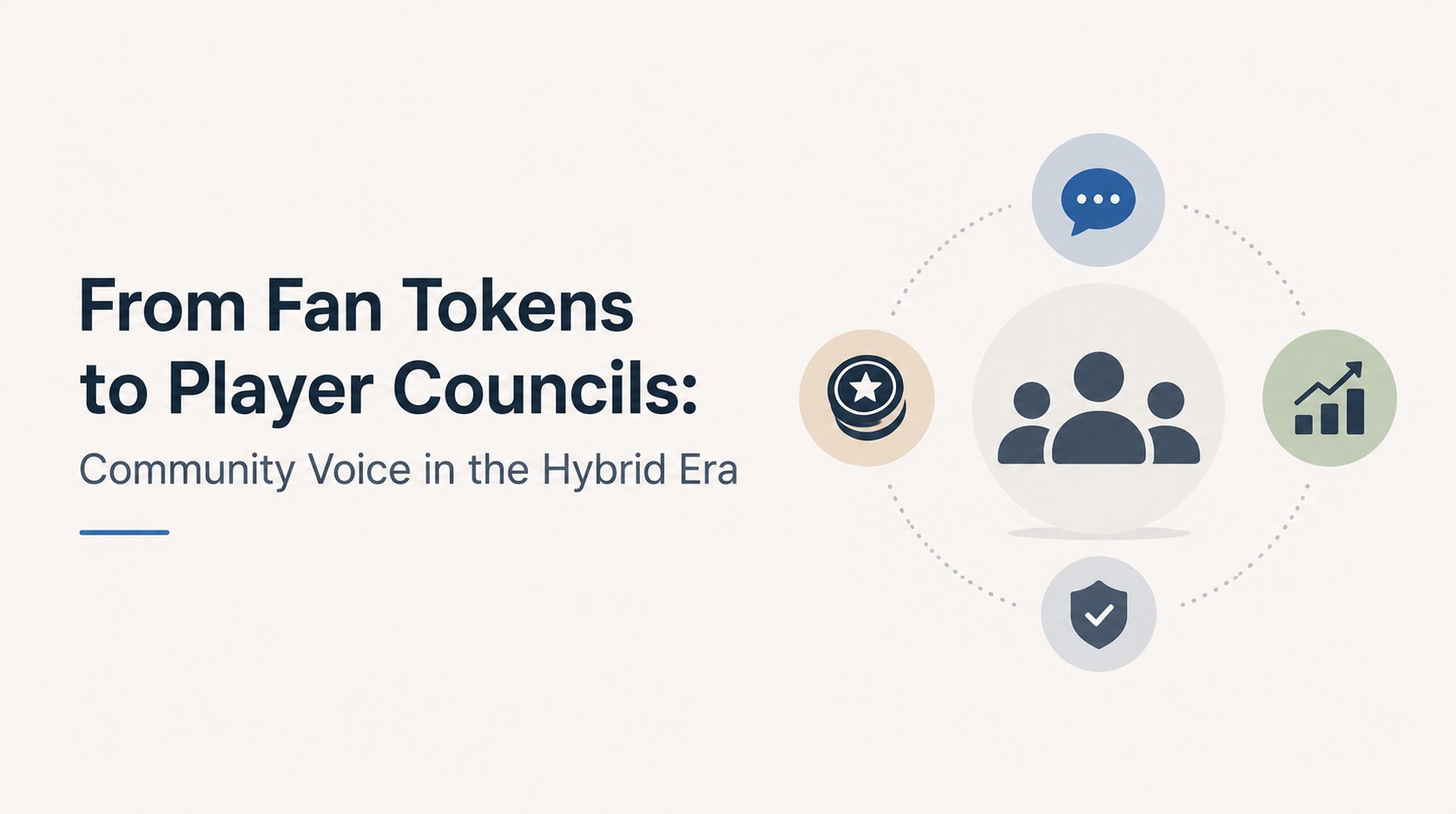
From Fan Tokens to Player Councils: Community Voice in the Hybrid Era
For a while, community participation in web3 was often reduced to a simple formula: buy a token, vote in a poll, feel involved. That model helped introduce the idea of digital participation, but it also exposed its limits. Fan tokens created attention, yet they did not always create meaningful influence. In the hybrid web2-web3 era, communities are asking for something more durable: not just tradable access, but structured voice. That is why the conversation is moving from fan tokens to player councils.

The Great Web3 Reset: What the Industry Learned After the Hype Cycle
There was a time when web3 gaming was sold as the next unavoidable revolution in gaming. Tokens, NFTs, DAOs, and “play-to-earn” mechanics were presented not just as features, but as the future of the medium itself. In 2025 and 2026, that language feels much quieter. The hype has cooled, funding has become more selective, and both players and developers are asking a more practical question: what actually works once the buzz is gone?
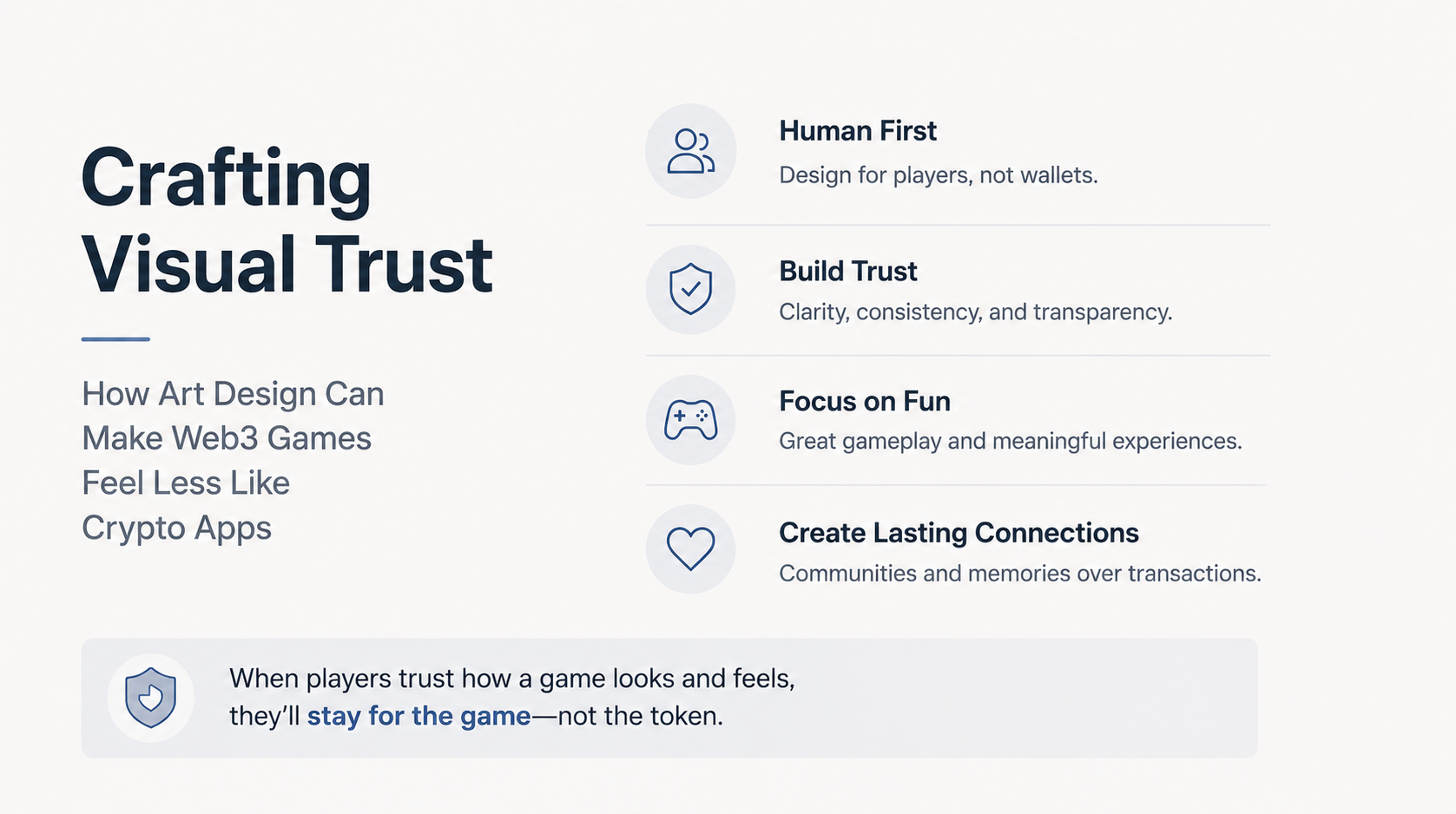
Crafting Visual Trust: How Art Design Can Make Web3 Games Feel Less Like Crypto Apps
Discover how Web3 game art and UI design can build player trust by replacing crypto-heavy visuals with familiar game aesthetics, clear onboarding, readable rewards, and emotionally warm interfaces.
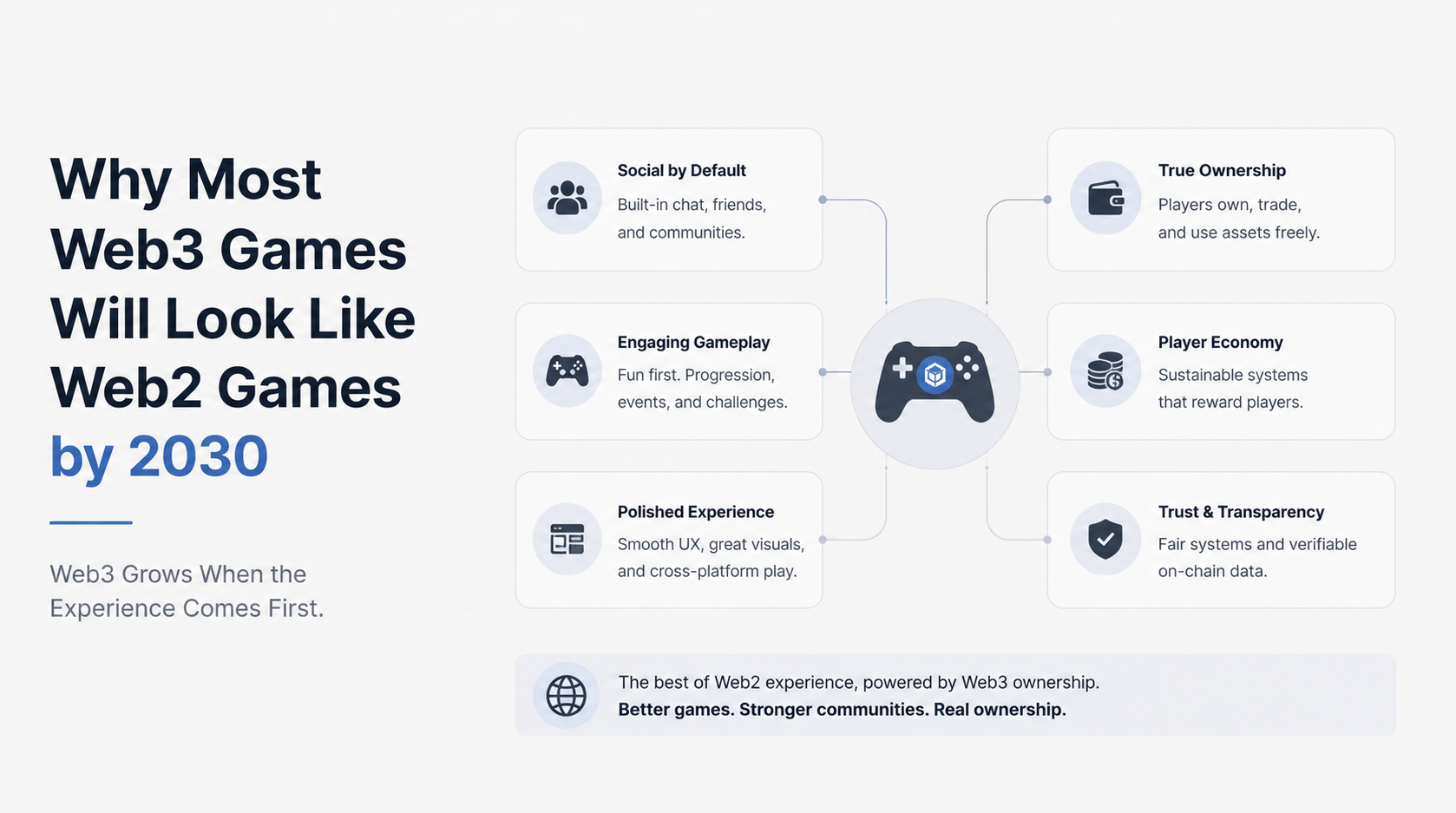
Why Most Web3 Games Will Look Like Web2 Games by 2030
As blockchain gaming matures, the most successful Web3 games may become almost indistinguishable from traditional Web2 games. This article explores how technologies such as account abstraction, embedded wallets, gasless transactions, and hybrid blockchain architectures are removing friction from the player experience. It examines why future gamers will likely enjoy the benefits of digital ownership, decentralized economies, and blockchain-based assets without ever needing to understand wallets, gas fees, or NFTs. Ultimately, the future of Web3 gaming may not be about making blockchain more visible-it may be about making it disappear.

Devlog-10: Public & Private Chat Are Live, Referral Rewards Are Here, and a New Web3 Payment Option Is Coming
In Devlog-10, we share major progress on our Web3 game: the chat system is now live, the referral rewards system is active, a new alternative Web3 payment option is in development, and hybrid Web2 onboarding is planned for the next sprint.
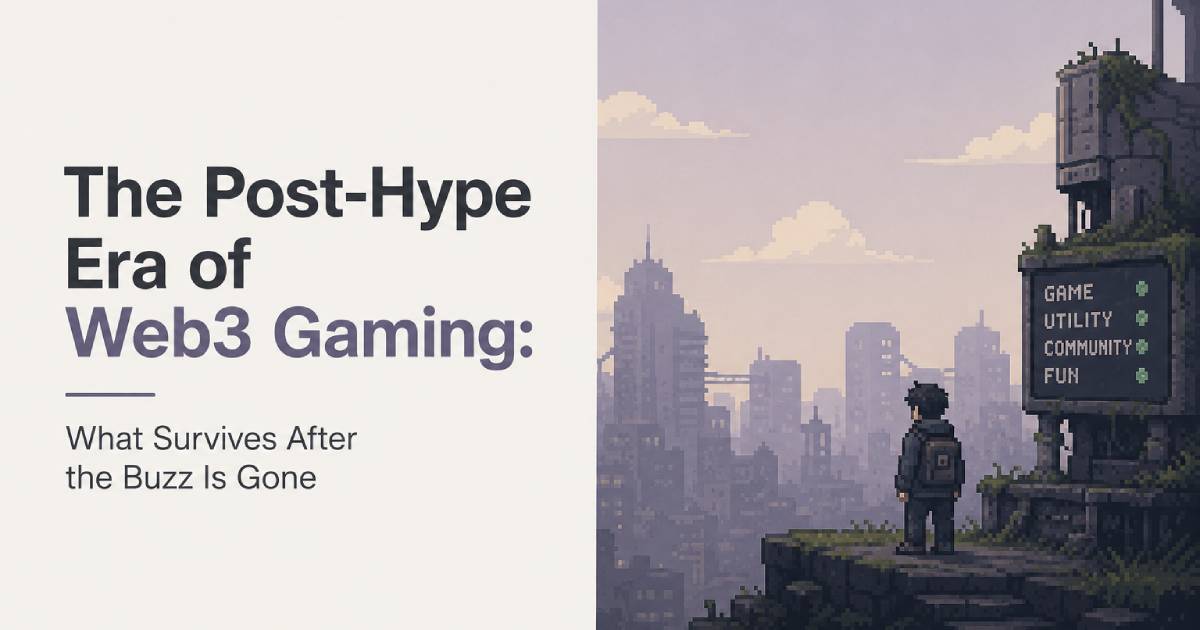
The Post-Hype Era of Web3 Gaming: What Survives After the Buzz Is Gone
Web3 gaming is no longer in its “everything on-chain, everything tokenized” phase. The hype wave has cooled, NFT trading had a weak 2024 by DappRadar's count, and Web3 gaming activity and funding both softened in early 2025. At the same time, the sector has not disappeared. What remains is more practical, more selective, and far more focused on player experience than speculation. That shift matters because it changes the question. The old question was, “How do we make everything Web3?” The new one is, “Which parts of Web3 actually make games better?” In the post-hype era, the projects that survive are not the loudest. They are the ones that keep utility, reduce friction, and protect trust.
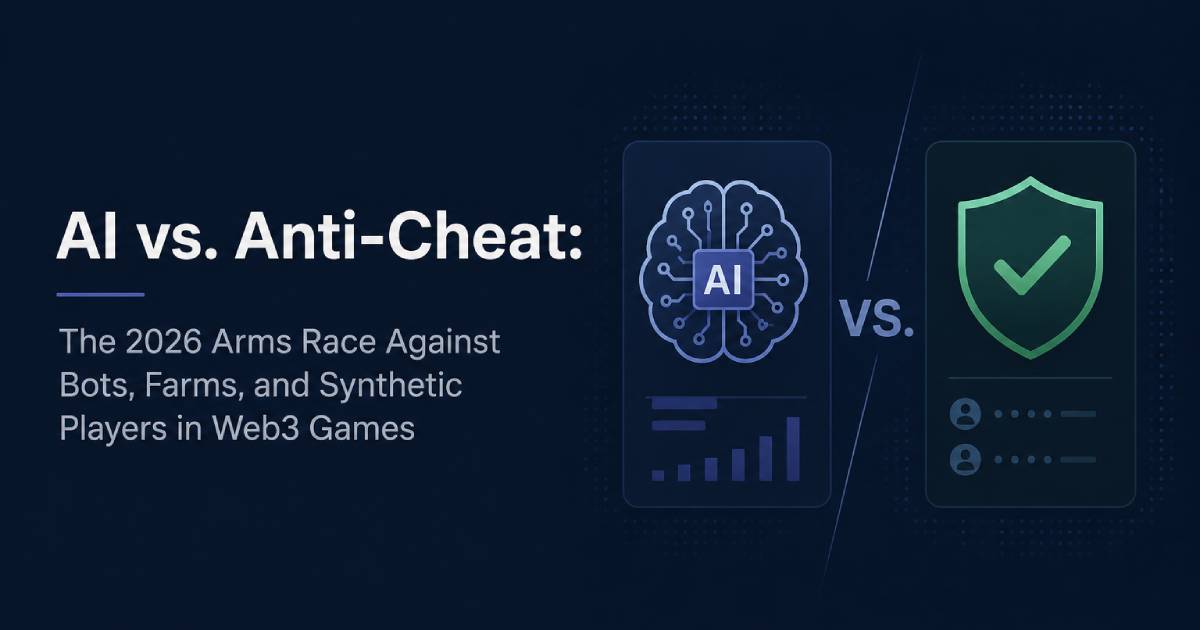
AI vs. Anti-Cheat: The 2026 Arms Race Against Bots, Farms, and Synthetic Players in Web3 Games
Web3 games didn't invent cheating-but they changed the prize. When items can be traded, tokens can be claimed, and progression can be monetized, every mechanic becomes a target for automation. In 2026, the threat is no longer “a few botters.” It's industrial farms and AI-driven synthetic players built to look human, move like humans, and drain your economy quietly. The broader internet shows why this is accelerating: Akamai reported AI-driven bot activity surging 300% year-over-year in its State of the Internet research. [1] Thales/Imperva's bot research describes a world where automated traffic has overtaken human traffic and where bot activity increasingly hits applications and APIs, not just front-end pages. [2] If your game exposes any valuable endpoint-login, quests, claims, marketplace actions-assume it will be scripted. This article maps the threat landscape and provides a practical, studio-ready defense playbook for 2026.
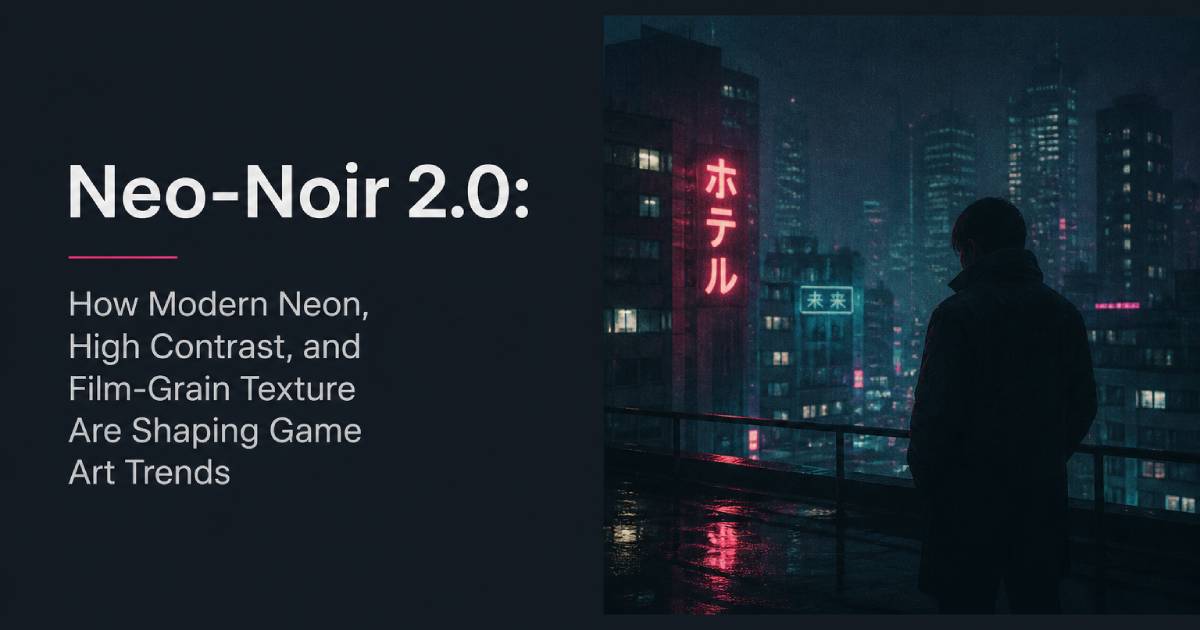
Neo-Noir 2.0: How Modern Neon, High Contrast, and Film-Grain Texture Are Shaping Game Art Trends
Neo-Noir is back-rebuilt for modern engines. Learn how today's neon noir game art uses high-contrast lighting, wet-surface reflections, cinematic color scripts, and carefully tuned film grain to create worlds that look incredible in motion and in screenshots. Includes practical art-direction rules and references.

Cheating in Web3 Games: How Decentralisation Changes Anti-Cheat Design
Cheating has always been a persistent challenge in online gaming. From aimbots in first-person shooters to gold farming in MMORPGs, developers have spent decades building anti-cheat systems to protect gameplay integrity. But Web3 gaming introduces a completely new paradigm. With decentralisation, on-chain ownership, and transparent systems, the rules of anti-cheat design are fundamentally changing. In Web3 games, cheating is no longer just about exploiting code-it can involve economic manipulation, smart contract abuse, and system-level vulnerabilities. This forces developers to rethink how fairness, trust, and security are enforced.